
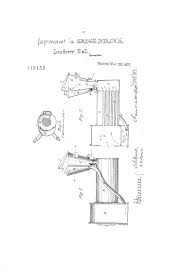
On this day in 1871, African American inventor Landrow Bell was granted a U.S. patent Patent #115,153 for an innovative locomotive smoke stack design. His invention improved the exhaust system of steam-powered locomotives, contributing to the efficiency and safety of railway transportation. Bell’s achievement is one of many examples of Black ingenuity during the post-Civil War era, a time when African Americans were actively shaping the industrial age despite intense social and legal barriers.
On May 23, 1953, Dr. Rufus E. Clement, then president of Atlanta University, was elected to the Atlanta Board of Education, becoming the first African American to hold public office in Atlanta since Reconstruction. ?
Dr. Clement was a distinguished educator and administrator. Born on June 26, 1900, in Salisbury, North Carolina, he earned his Ph.D. in history from Northwestern University. He served as the first dean of Louisville Municipal College before becoming the sixth and longest-serving president of Atlanta University, holding the position from 1937 until his death in 1967.
His election to the school board marked a significant milestone in Atlanta’s history, reflecting progress in African American political representation during that era.
Reggae icon and cultural revolutionary Robert Nesta “Bob” Marley was honored with a state funeral in Jamaica following his death at age 36. The ceremony was attended by both the Prime Minister and the Leader of the Opposition, symbolizing Marley’s unifying impact on the nation. After the service, his body was returned to his birthplace in Nine Mile, Saint Ann Parish, where he was laid to rest in a mausoleum. Marley’s legacy as a musician, prophet, and freedom fighter continues to resonate around the world.
Neville Bonner, a respected Aboriginal leader and president of the One People of Australia League, was selected to fill a Senate vacancy, becoming the first Aboriginal person to serve in the Australian Parliament. His appointment followed the departure of Dame Annabelle Rankin, who had become Australia’s High Commissioner to New Zealand. Bonner’s historic entry into politics marked a significant step forward in Indigenous representation in Australian government.
Shuffle Along, the groundbreaking musical featuring an all-Black cast and creative team, premiered at the 63rd Street Music Hall in New York City. Written by Noble Sissle and Eubie Blake with a book by Flournoy Miller and Aubrey Lyles, the show became a Broadway sensation. Its success marked a turning point in American theater by opening doors for Black performers and influencing the development of jazz-infused musical styles. It also helped launch the careers of stars like Josephine Baker and Paul Robeson.
On May 23, 1920, the Methodist Episcopal Church, during its general conference in Des Moines, Iowa, elected its first two Black bishops: Matthew W. Clair of Washington, D.C., and Robert E. Jones of New Orleans. This marked a significant milestone in religious leadership and racial inclusion within one of America’s largest Protestant denominations.
On May 23, 1878, attorney John Henry Smyth was appointed as U.S. Minister to Liberia. A prominent African American diplomat and advocate for civil rights, Smyth served multiple terms in Liberia, strengthening ties between the two nations and representing African American leadership on the world stage during the Reconstruction Era. His appointment was a powerful symbol of Black diplomatic presence and international representation in the late 19th century.
Scipio Africanus Jones Jr. was born on May 23, 1910, into a legacy of Black excellence and civil rights. As a U.S. diplomat, he was stationed in Liberia during a critical period of Pan-African solidarity and Cold War politics. His career highlights the strategic importance of African-American diplomatic missions to newly independent African nations. Jones Jr.’s presence in Liberia helped to strengthen Black transnational alliances and further U.S.-Africa engagement through a racial lens. His work laid a foundation for future African-American ambassadors in the Global South and exemplified Black leadership in international affairs. His story is a reminder of how African Americans played key roles in shaping U.S. foreign policy during decolonization. May 23 marks not just his birth, but the entry of Black American diplomacy into a new global era—one that challenged white supremacy on an international stage.
On May 23, 1992, Angola and Cuba signed the final military accord confirming Cuba’s full troop withdrawal after nearly 15 years of support in the Angolan Civil War. This agreement was pivotal in the de-escalation of Cold War tensions in Southern Africa. Cuba’s military intervention, beginning in 1975, was one of the most significant Pan-African solidarities in history. Led by Fidel Castro and welcomed by Angola’s MPLA government, the Cuban forces played a crucial role in repelling apartheid South Africa’s incursions. The final accord symbolized a shift toward African self-determination and regional peace, demonstrating the power of international Black alliances. May 23 is a day to remember the sacrifices and global Black solidarity that helped free Southern Africa from colonial and apartheid forces.
On May 23, 1963, thirty-two African nations convened in Addis Ababa, Ethiopia, to form the Organization of African Unity (OAU), a historic milestone for continental independence and unity. Spearheaded by leaders like Kwame Nkrumah of Ghana and Emperor Haile Selassie of Ethiopia, the OAU was designed to promote solidarity among African states, eliminate colonialism, and defend sovereignty. It laid the groundwork for today’s African Union. The founding of the OAU marked a new era of Pan-African diplomacy, economic development, and mutual defense. May 23 stands as a celebration of African agency and a reminder of the long march toward continental integration. The OAU’s legacy continues to influence Black internationalism and Afro-diasporic political strategies globally.


© 2026 KnowThyHistory.com. Know Thy History