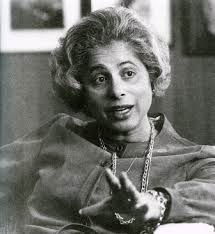
On May 19, 1965, Patricia Roberts Harris was nominated by President Lyndon B. Johnson to serve as the U.S. Ambassador to Luxembourg, making her the first African American woman appointed to an ambassadorial post abroad. She presented her credentials on September 7, 1965, and served in that role until September 22, 1967 .?AlamyOffice of the Historian
Harris’s appointment was a significant milestone in U.S. diplomatic history, breaking racial and gender barriers at a time when both were deeply entrenched in American society. She expressed both pride and a sense of responsibility about being the “first,” noting that her appointment highlighted the lack of previous consideration for African American women in such roles .?Wikipedia
Her distinguished career continued with further groundbreaking achievements. In 1969, she became the first Black woman to serve as dean of a U.S. law school at Howard University. Later, under President Jimmy Carter, she held two cabinet-level positions: Secretary of Housing and Urban Development (1977–1979) and Secretary of Health, Education, and Welfare (1979–1981), which was renamed the Department of Health and Human Services during her tenure. These appointments made her the first African American woman to serve in the U.S. Cabinet and the first person to hold two different cabinet posts. ?SamePassage
Patricia Roberts Harris’s legacy continues to inspire, and she remains a pivotal figure in the history of American public service and civil rights.?
On this day, Willy T. Ribbs made history as the first African American driver to qualify for the prestigious Indianapolis 500. Ribbs’ achievement shattered a major racial barrier in professional auto racing, earning him a place among the sport’s pioneers and paving the way for future drivers of color.
On May 19, 1968—Malcolm X’s birthday and just weeks after the assassination of Dr. Martin Luther King Jr.—The Last Poets were formed in Marcus Garvey Park, Harlem. Founded by David Nelson, Gylan Kain, and Abiodun Oyewole, the group used poetry and percussion to channel Black rage, resistance, and cultural pride. They soon expanded from three poets and a drummer to a powerful collective of seven young Black and Hispanic artists. The Last Poets are widely recognized as forefathers of hip hop, fusing spoken word with rhythm to create politically charged performances that captured the spirit of Black liberation.
Born May 19, 1948, in Spanish Town, Jamaica, Grace Jones rose to international fame as a singer, actress, and fashion icon who shattered norms around race, gender, and identity. With her striking androgynous style, bold personality, and genre-defying music, Jones became a symbol of unapologetic Black individuality. Her work in the 1970s and ’80s fused disco, reggae, and new wave, challenging Western beauty standards and conventional femininity. Beyond music, her acting roles and modeling career broke barriers in industries that often marginalized Black women. Jones’s fearless persona continues to influence pop culture, queer aesthetics, and the global fashion scene. Celebrating her birth on May 19 highlights a cultural revolutionary who refused to be defined or confined. Her legacy is one of power, defiance, and visionary artistry that resonates across generations and identities.
Lorraine Hansberry was born in Chicago on this day in 1930. She would go on to become a trailblazing playwright, best known for A Raisin in the Sun, the first play by a Black woman produced on Broadway. Her second major work, The Sign in Sidney Brustein’s Window, also earned critical acclaim. Hansberry’s powerful narratives confronted race, class, gender, and human rights with unprecedented honesty and vision.
Malcolm X, born Malcolm Little on May 19, 1925, in Omaha, Nebraska, remains one of the most powerful voices in the fight for Black liberation. His early life was shaped by racial violence and systemic injustice, fueling his later transformation into a fearless advocate for Black self-determination. As a minister of the Nation of Islam and later as the founder of the Organization of Afro-American Unity, Malcolm X delivered searing critiques of white supremacy, capitalism, and colonialism. He emphasized the need for Black pride, economic empowerment, and international solidarity. His intellectual rigor and unapologetic stance galvanized a generation and continue to inspire movements for justice worldwide. His birthday, May 19, is now honored as Malcolm X Day in some U.S. cities and is globally recognized by Pan-African activists. Remembering his birth on this day is a tribute to his enduring legacy as a radical truth-teller and visionary leader.
On May 19, 1878, Blanche Kelso Bruce was appointed Register of the U.S. Treasury, becoming the first African American to have his signature appear on U.S. currency. A former enslaved man who became a U.S. Senator from Mississippi during Reconstruction, Bruce’s appointment was a powerful symbol of Black advancement in federal government roles during a period of intense racial hostility.
On May 19, 1959, Lorraine Hansberry became the first African American playwright to win the New York Drama Critics\’ Circle Award for her groundbreaking play A Raisin in the Sun. The play, which debuted earlier that year, offered a complex, authentic portrayal of a Black family’s struggles on Chicago’s South Side. Inspired by Hansberry’s own experiences with housing discrimination, A Raisin in the Sun challenged mainstream stereotypes and became a defining moment in American theater. Its exploration of race, identity, dreams, and generational conflict resonated deeply across cultural lines. Hansberry’s achievement on May 19 was a major breakthrough for Black writers and remains a pivotal moment in both theatrical and civil rights history. Her legacy continues to inspire new generations of playwrights, activists, and creatives seeking to tell stories rooted in truth, dignity, and resistance.
Yuri Kochiyama, born on May 19, 1921, in San Pedro, California, became one of the most steadfast allies of Black liberation. A Japanese-American activist, she first rose to national attention as a close associate of Malcolm X and a vocal advocate for political prisoners, reparations, and human rights. Kochiyama was present during Malcolm X’s assassination and cradled him in his final moments, a powerful image of cross-racial solidarity. Her activism spanned decades and included work with the Black Panthers, Puerto Rican independence groups, and Asian-American civil rights movements. Born on the same day as Malcolm X, Kochiyama’s life symbolized unity across oppressed communities and the necessity of collective struggle. Honoring her birth on May 19 is an opportunity to uplift stories of allyship, resistance, and radical vision. Her example continues to inspire activists building inclusive, intersectional movements for justice.
On May 19, 1934, Elijah Muhammad officially assumed leadership of the Nation of Islam (NOI), shaping the organization into one of the most influential Black nationalist movements in U.S. history. Under his direction, the NOI emphasized self-reliance, discipline, and economic independence within Black communities. Muhammad mentored prominent figures like Malcolm X and Muhammad Ali, and established temples, schools, and businesses across the country. His teachings centered on spiritual awakening, racial pride, and resistance to white supremacy, resonating deeply during the era of segregation and beyond. While controversial, his leadership cultivated a framework of empowerment that redefined Black identity and community structure. Commemorating this pivotal leadership shift on May 19 places Elijah Muhammad’s contribution within the broader context of Black resistance and ideological development in 20th-century America. His impact continues to be felt in conversations around Black autonomy, faith, and collective power.


© 2026 KnowThyHistory.com. Know Thy History