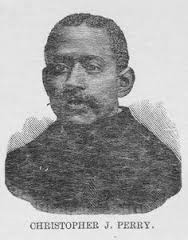
On this day, Christopher J. Perry—pioneering Black journalist, entrepreneur, and advocate for racial equality—passed away. In 1884, he founded The Philadelphia Tribune, which remains the oldest continuously published African-American newspaper in the United States and the largest in the Greater Philadelphia area. Under his leadership, the Tribune became a vital platform for civil rights, education, and economic empowerment in the Black community.
On May 21, 1975, Lowell W. Perry was confirmed by the U.S. Senate as Chairman of the Equal Employment Opportunity Commission (EEOC), following his nomination by President Gerald R. Ford on May 12, 1975 . He was officially sworn into office on May 27, 1975, in a ceremony held in the White House Rose Garden, with U.S. District Judge Damon J. Keith administering the oath.? Justia Law
Perry’s appointment was historically significant, as he became the first African American to serve as Chairman of the EEOC. His diverse background included roles as an NFL player and coach, a broadcaster, a labor relations professional, and an executive at Chrysler Corporation. At Chrysler, he notably became the company’s first African American plant manager. ?Wikipedia
During his tenure at the EEOC, Perry focused on strengthening the agency’s enforcement of anti-discrimination laws and addressing systemic issues in employment practices. He served as Chairman until 1976, after which he returned to the private sector.
On May 21, 1970, the National Guard was mobilized to respond to escalating protests at Ohio State University. Both Black and white students united in demanding the termination of the university’s ROTC (Reserve Officers’ Training Corps) programs and calling for the increased admission and support of Black students. The demonstration reflected broader national unrest tied to racial inequality and opposition to the Vietnam War.
Police and National Guardsmen opened fire on student demonstrators at North Carolina A&T State University in Greensboro, North Carolina. The incident resulted in the death of 22-year-old honors student Willie Grimes and injuries to at least five policemen. The confrontation occurred during a time of heightened racial tensions and student activism related to civil rights and police brutality.
On May 21, 1961, Alabama Governor John Patterson declared martial law in Montgomery in response to escalating violence surrounding the Freedom Riders. The Freedom Riders were civil rights activists challenging segregation in interstate bus travel. Upon their arrival in Montgomery, they were met with violent opposition from white mobs, leading to severe beatings of the activists and journalists. ?Time Graphics
That evening, over 1,500 supporters, including Dr. Martin Luther King Jr., gathered at the First Baptist Church to support the Freedom Riders. A mob of approximately 3,000 white individuals surrounded the church, threatening those inside. Dr. King contacted U.S. Attorney General Robert F. Kennedy, who dispatched federal marshals to protect the congregation. ?EJI Calendar
In response to the unrest, Governor Patterson ordered the Alabama National Guard, under Major General Henry V. Graham, to restore order. The National Guard secured the area, and by early morning, they safely escorted those inside the church to their homes. ?Wikipedia
This intervention was a pivotal moment in the civil rights movement, highlighting the federal government’s role in protecting activists and enforcing desegregation laws.
On May 21, 1862, Mary Jane Patterson became the first African American woman to earn a bachelor’s degree, graduating from Oberlin College in Ohio. Born to formerly enslaved parents in North Carolina, Patterson moved North and enrolled at Oberlin, which was one of the few colleges at the time accepting Black and female students. Her academic excellence marked a significant breakthrough at a time when education for Black Americans, especially women, was rare and often discouraged. Patterson went on to teach in Washington, D.C., where she later became the first Black principal of the prestigious Preparatory High School for Colored Youth (now Dunbar High School). Her life and career helped pave the way for generations of Black women in higher education and professional leadership roles. Her May 21 graduation is a landmark in the history of Black intellectual achievement and educational equality.
On May 21, 1833, Oberlin College in Ohio took a groundbreaking step toward educational equality by enrolling Black students in its academic programs. It became one of the first colleges in the United States to admit students regardless of race or gender, setting a powerful precedent in the fight for inclusive education.
Significance: This act marked a radical shift in American higher education. At a time when slavery still gripped the South and many Northern institutions excluded African Americans, Oberlin stood as a beacon of progressive values and abolitionist principles. The college later became a hub for anti-slavery activism and a stop on the Underground Railroad.
Legacy: Oberlin’s commitment to racial inclusion helped lay the groundwork for the broader movement toward educational access and civil rights in the United States.
On May 21, 1921, Shuffle Along, one of the first major Broadway musicals written, produced, and performed by African Americans, opened at the 63rd Street Music Hall in New York City. Created by Noble Sissle, Eubie Blake, Flournoy Miller, and Aubrey Lyles, the show was groundbreaking, blending jazz rhythms with sophisticated choreography and offering a new image of Black life. Despite initial financial and racial barriers, Shuffle Along was a massive success and ran for over 500 performances. It helped launch the careers of future stars like Josephine Baker and Paul Robeson, and it directly influenced the Harlem Renaissance by proving Black theatrical productions could be commercially viable and artistically innovative. More than just entertainment, the musical disrupted stereotypes and redefined Black representation in American theater. Its legacy lives on as a critical moment when Black artistry broke through the mainstream cultural ceiling on Broadway.
On May 21, 1964, civil rights organizers gathered to begin training hundreds of volunteers for Mississippi Freedom Summer, a campaign to register African American voters in one of the most violently segregated states in the country. Led by groups like SNCC (Student Nonviolent Coordinating Committee) and CORE (Congress of Racial Equality), the volunteers—many of them college students—risked their lives to confront systemic racism. Training emphasized nonviolent resistance and prepared volunteers for the hostility they would face. That summer would see dozens of churches burned, civil rights workers arrested, and the infamous murders of James Chaney, Andrew Goodman, and Michael Schwerner. Yet the campaign led to the registration of thousands of new Black voters and laid the groundwork for the Voting Rights Act of 1965. May 21 marks a turning point in Black history—a coordinated, multiracial effort to dismantle Jim Crow through organized grassroots activism.
On May 21, 1979, the “Danville 8”—a group of Black workers and activists—were found guilty in Danville, Illinois, for participating in civil disobedience against racism and unsafe working conditions at General Motors. These workers had been protesting racial discrimination in hiring, promotions, and workplace safety at the GM foundry, which had long marginalized Black laborers. Their conviction sparked outrage among labor and civil rights leaders, who viewed it as a miscarriage of justice and an attack on the right to organize. The Danville 8 became symbols of a broader struggle for Black labor rights and workplace equity in the post-Civil Rights era. Their case revealed the ongoing systemic oppression that Black workers faced even after the formal end of Jim Crow. May 21 is remembered as a key date in the Black labor movement’s fight for dignity, safety, and racial justice on the factory floor.


© 2026 KnowThyHistory.com. Know Thy History