
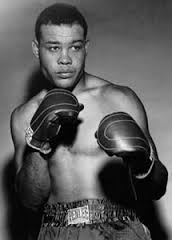
Born on May 13, 1914, in LaFayette, Alabama, Joe Louis would rise to become one of the most iconic boxers in history. Nicknamed the \”Brown Bomber,\” Louis held the world heavyweight boxing title from 1937 to 1949, longer than any other champion in history. His victories challenged racist stereotypes and served as a symbol of pride for African Americans during a time of deep segregation. His 1938 defeat of German boxer Max Schmeling became a pivotal moment in U.S. history, symbolizing a blow to Nazi propaganda. Louis was more than a sportsman—he was a national hero whose grace under pressure and quiet dignity earned admiration across racial lines. His career helped pave the way for future Black athletes to be accepted and celebrated. May 13 marks the birth of a man whose fists carried not just power, but a message of resilience and racial pride.
On May 13, 1976, Sir Douglas Nicholls was appointed Governor of South Australia, making history as the first Aboriginal person to hold a vice-regal office in Australia. A respected pastor, activist, and former professional athlete, Nicholls had long advocated for Aboriginal rights, including citizenship and land recognition. At age 69, his appointment was a symbolic breakthrough in a country still grappling with its colonial legacy. Knighted in 1972, Nicholls’ legacy stretches across sport, faith, and politics — and his service as governor represented a powerful acknowledgment of Aboriginal leadership in public life.
On May 13, 1969, Charles Evers made history in Fayette, Mississippi by becoming the first Black mayor elected in a racially integrated town in the state since Reconstruction. His victory marked a powerful milestone in the long struggle for civil rights and political representation in the Deep South. A brother of slain civil rights leader Medgar Evers, Charles ran on a platform of justice, economic development, and inclusion—garnering support from both Black and white voters. Two years later, in June 1971, he again broke barriers by becoming the first Black candidate in the 20th century to run for governor of Mississippi. Though he did not win, his campaign laid a foundation for future Black political leadership in the region.
On May 13, 1950, Stevland Hardaway Judkins—better known as Stevie Wonder—was born in Saginaw, Michigan. Blind since shortly after birth, Wonder overcame adversity to become one of the most influential and celebrated musicians of all time. Signed to Motown at just 11 years old, his prolific career redefined soul, pop, R&B, and funk music. With hits like \”Superstition,\” \”Sir Duke,\” and \”Isn’t She Lovely,\” Wonder won over 20 Grammy Awards and an Academy Award, using his platform to advocate for civil rights and disability awareness. In 1981, he was instrumental in the campaign to make Martin Luther King Jr.\’s birthday a national holiday. His fusion of music, activism, and spiritual insight has inspired generations worldwide. Stevie Wonder’s birth on May 13 is more than a musical milestone—it marks the arrival of a genius whose artistry and activism transformed American culture.
On May 13, 1865, more than a month after General Lee’s surrender at Appomattox, the Sixty-second U.S. Colored Troops (U.S.C.T.) joined two white regiments to fight the Battle of Palmito Ranch near White’s Ranch, Texas — the last land battle of the American Civil War. The 62nd U.S.C.T., composed of African American soldiers, demonstrated bravery and discipline even as the war had officially drawn to a close. Ironically, Confederate forces won this skirmish, despite the South’s overall defeat. The participation of Black troops in this final confrontation symbolized both the contradictions and the courage embedded in the Union’s fight for freedom.
On May 13, 1888, Brazil passed the \”Lei Áurea\” or \”Golden Law,\” formally abolishing slavery in the country—the last nation in the Western Hemisphere to do so. Signed by Princess Isabel of Portugal, the law immediately freed nearly 700,000 enslaved Africans and their descendants. Brazil had been one of the largest importers of enslaved Africans, with over 4 million people brought over during the transatlantic slave trade. Though the law ended legal enslavement, formerly enslaved people were not granted land, compensation, or systemic support, creating lasting racial inequalities. Today, Afro-Brazilians face ongoing disparities rooted in that legacy. May 13 is recognized as a day of liberation and a reminder of the long journey toward racial equity in Brazil. This landmark date is both a celebration and a call to continue dismantling systemic racism in Brazil and throughout the African diaspora.
On May 13, 1969, civil rights leader Floyd McKissick broke ground on \”Soul City,\” an ambitious attempt to build a majority-Black planned community in rural North Carolina. As former head of the Congress of Racial Equality (CORE), McKissick envisioned Soul City as a beacon of Black self-determination, economic development, and empowerment. Funded by federal urban development grants, the city aimed to offer affordable housing, jobs, and infrastructure to African Americans fleeing urban poverty. Although plagued by political opposition and underfunding, Soul City laid a blueprint for future experiments in Black-owned and operated economic zones. The project challenged the status quo by asserting that Black people deserved not only civil rights but also control over land, wealth, and governance. While it never reached its full potential, Soul City remains a powerful example of the intersection between civil rights, economic independence, and visionary Black leadership.
On May 13, 1970, Charles Evers was elected mayor of Fayette, Mississippi, becoming the first Black person to hold such office in the state since Reconstruction. The brother of slain civil rights activist Medgar Evers, Charles was a determined advocate for Black political power and economic advancement. His election shattered nearly a century of exclusion of African Americans from municipal leadership in Mississippi, a state long defined by its brutal resistance to Black civil rights. As mayor, Evers promoted racial integration, Black entrepreneurship, and educational equity. His victory symbolized a shift in Southern politics, made possible by the gains of the Civil Rights Movement and the Voting Rights Act of 1965. Though his policies were often met with resistance, Evers remained a bold and uncompromising figure in the fight for racial justice and local control. His leadership marked a turning point in Mississippi’s long history of racial exclusion.
On May 13, 1909, Mordecai Wyatt Johnson earned his master\’s degree from the University of Chicago, marking a major milestone in his rise to become a transformative Black educator. In 1926, he became the first Black president of Howard University, where he served for 34 years. Johnson significantly expanded the university’s academic programs and positioned Howard as a key intellectual hub for African Americans. Under his leadership, Howard produced future legal giants such as Thurgood Marshall and became deeply involved in civil rights litigation. Johnson was a gifted orator and theological scholar whose speeches tackled racism, economic injustice, and the moral failures of American democracy. His early academic achievements, like his 1909 graduation, laid the foundation for a lifetime of service to Black higher education. May 13 highlights a pivotal step in the journey of a man who helped shape 20th-century Black excellence.
On May 13, 1964, Malcolm X delivered a follow-up speech in Detroit reinforcing his now-famous “Ballot or the Bullet” message. Speaking with a mix of fiery urgency and strategic clarity, he warned African Americans that time was running out to achieve justice through the democratic process. Malcolm’s speech urged Black people to stop waiting on white politicians and to use both electoral power and self-defense to gain civil rights. His message resonated with those frustrated by the slow progress of integration and the increasing violence faced by civil rights activists. The May 13 speech reaffirmed Malcolm X’s shift toward political organizing beyond religious lines and underscored his commitment to global Black solidarity. Though often mischaracterized, his message was one of empowerment, civic engagement, and dignity. This date underscores the enduring relevance of Black political self-determination in the face of systemic resistance.


© 2026 KnowThyHistory.com. Know Thy History