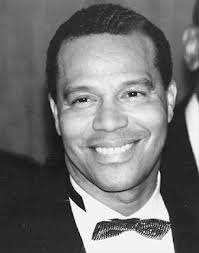
On May 10, 1933, Louis Farrakhan (born Louis Eugene Walcott) was born in The Bronx, New York. A classically trained violinist and former calypso performer, Farrakhan would rise to national prominence as the leader of the Nation of Islam following Elijah Muhammad’s death. Known for his powerful oratory and controversial positions on race, religion, and politics, Farrakhan played a pivotal role in revitalizing the Nation in the late 1970s and 1980s. He was also the principal organizer of the historic Million Man March in 1995, which brought a million Black men to Washington, D.C., to promote unity, responsibility, and atonement.
On May 10, 1981, Hoyt W. Fuller, a prominent literary critic and editor, passed away at the age of 57 in Atlanta, Georgia. Fuller was a pioneering force in African American literature, best known for his role as editor of Black World (formerly Negro Digest) and later First World magazine. Through his work, Fuller championed writers such as Amiri Baraka, Sonia Sanchez, and Haki Madhubuti, helping to shape the Black Arts Movement of the 1960s and 1970s. He believed literature should be a vehicle for cultural identity, political resistance, and Pan-African unity. His legacy endures through the writers and movements he nurtured.
On May 11, 1968, nine caravans of poor Americans arrived in Washington, D.C., marking the first phase of the Poor People’s Campaign, a multiracial effort initiated by Dr. Martin Luther King Jr. before his assassination. The caravans, which began their journey on May 2 from different regions across the country, picked up thousands of demonstrators along the way—Black, white, Latinx, and Native American activists united in demanding economic justice.
In Washington, demonstrators constructed Resurrection City, a shantytown of tents and wooden structures built on a 16-acre site near the Lincoln Memorial. It became both a symbol of protest and a temporary home for over 3,000 people, calling attention to systemic poverty in America. The campaign remains one of the most powerful yet underrecognized civil rights actions of the late 1960s.
On May 11, 1965, Black citizens in Norfolk, Virginia, organized a mass meeting to demand equal rights and full access to the ballot. This gathering was part of a broader wave of civil rights mobilization following the Selma-to-Montgomery marches and growing national momentum toward the Voting Rights Act. The Norfolk rally reflected a regional movement, as additional conventions were held in Petersburg (June 6), Vicksburg (June 19), Alexandria (August 3), Nashville (August 7–11), Richmond (September 18), Jackson, and Raleigh (September 29–October 3). These meetings galvanized grassroots activism across the South and pressured local and federal leaders to address voter suppression and systemic inequality.
On May 11, 1934, Sierra Leonean artist Asadata Dafora premiered his groundbreaking opera-dance drama Kykunkor (The Witch Woman) at the Little Theater in New York City. This production was revolutionary as it was the first opera presented in the United States that featured authentic African dances and music, performed in an African language by a predominantly African-born cast. Kykunkor challenged prevailing stereotypes and opened American audiences to the richness of African cultural expressions, laying the foundation for future African and African American artists in the realm of concert dance.
On May 11, 1985, the Philadelphia Police Department dropped a bomb on the headquarters of MOVE, a Black liberation group, during a standoff in the Cobbs Creek neighborhood. The bombing resulted in the deaths of 11 people, including five children, and destroyed over 60 homes, leaving more than 250 residents homeless. This marked the first time a U.S. city government deployed explosives on its own citizens. The incident sparked widespread outrage and remains a stark example of excessive force used against Black communities.
A quick timeline:
May 13, 1985 (morning): Police attempted to evict members of MOVE from their rowhouse at 6221 Osage Avenue using tear gas and water cannons.
Later that day: Police dropped a bomb (C-4 attached to a gasoline canister) from a helicopter onto the home.
The fire from the explosion spread and was allowed to burn, destroying 61 homes and killing 11 people, including 5 children.
On May 11, 1895, Reverend R.H. Boyd founded the National Baptist Publishing Board in Nashville, Tennessee. At a time when Black churches were largely excluded from white-owned religious publishing houses, this institution became a critical outlet for African American theological writing, Sunday school materials, and spiritual guidance. It empowered Black authors and pastors by giving them control over religious narratives and educational materials. The Board would go on to publish one of the oldest Black newspapers in the U.S., The National Baptist Voice, and became a key driver in African American literacy, self-determination, and religious organization. Its legacy lives on in the cultural and educational formation of millions within the Black Baptist community.
Thurgood Marshall, the first African American Supreme Court Justice, was born on May 11, 1908, in Baltimore, Maryland. As the chief legal architect of the civil rights movement, Marshall’s legacy is best known through his victory in Brown v. Board of Education (1954), which led to the desegregation of public schools. Before joining the Supreme Court, he founded the NAACP Legal Defense Fund and argued 32 cases before the Court, winning 29 of them. His legal strategy dismantled institutional racism and advanced equal protection under the law. Marshall served on the Supreme Court from 1967 to 1991, consistently advocating for civil liberties, the rights of the accused, and economic justice. His life remains a cornerstone in Black legal and political history.
On May 11, 1950, Jackie Robinson, the first Black Major League Baseball player of the modern era, testified before the House Un-American Activities Committee. Though the hearing was focused on communism, Robinson used the platform to speak powerfully against racial injustice and segregation in the military and American society. He defended civil rights activist Paul Robeson, while also emphasizing the patriotism of African Americans fighting for equality at home. Robinson’s testimony revealed the complexities of the Cold War era, where Black leaders were pressured to align with the U.S. government narrative while still advocating for civil rights. His boldness further positioned him as not just a sports hero, but a civil rights pioneer.
Langston Hughes, one of the foremost figures of the Harlem Renaissance, passed away on May 11, 1967, in New York City. His poetry, plays, and essays captured the everyday joys, sorrows, and spiritual resilience of Black America. Through works like The Weary Blues and Montage of a Dream Deferred, Hughes pioneered a literary voice that was distinctly African American, often blending jazz rhythms with social critique. Hughes believed art should be a tool for political expression and cultural pride, making him a beacon for future generations of Black writers and activists. His death marked the end of a creative era, but his influence endures in literature, education, and Black consciousness.


© 2026 KnowThyHistory.com. Know Thy History