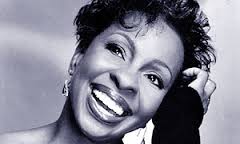
On this day, Gladys Knight—known as the “Empress of Soul”—was born in Atlanta, Georgia. A seven-time Grammy Award winner, she rose to fame as the lead singer of Gladys Knight & the Pips, delivering timeless hits such as “Midnight Train to Georgia” and “Neither One of Us.” Her powerful voice and enduring influence helped shape the sound of soul and R&B for generations.
Mary Lou Williams, born Mary Elfrieda Scruggs on May 8, 1910, in Atlanta, Georgia, passed away on May 28, 1981, at the age of 71 in Durham, North Carolina. Her death was due to bladder cancer. ?WikiTree
A pioneering jazz pianist, composer, and arranger, Williams was renowned for her versatility and innovation, contributing to various jazz styles including swing, bebop, and sacred jazz. Throughout her career, she collaborated with and mentored many prominent musicians such as Duke Ellington, Benny Goodman, Thelonious Monk, and Dizzy Gillespie. ?Encyclopedia Britannica
In her later years, Williams embraced Catholicism, which deeply influenced her music. She composed several religious works, including “Mary Lou’s Mass,” and performed the first jazz mass at St. Patrick’s Cathedral in New York City in 1975. ?National Women’s History Museum
At the time of her passing, Williams was serving as an artist-in-residence at Duke University, where she taught jazz history and led the university’s jazz ensemble. Her funeral was attended by notable figures in the jazz community, including Dizzy Gillespie, Benny Goodman, and Andy Kirk. ?National Women’s History Museum
Mary Lou Williams was laid to rest in Calvary Catholic Cemetery in Pittsburgh, Pennsylvania, the city where she spent much of her early life and career.
On May 28, 1940, Betty Shabazz—civil rights advocate, educator, and the widow of Malcolm X—was born in Detroit, Michigan. A powerful figure in her own right, she championed education, Black empowerment, and women’s rights. Following Malcolm X’s assassination, she continued his legacy through public speaking, academic work, and community activism.
On May 28, 1956, a federal court ruled that bus segregation laws in Montgomery, Alabama, were unconstitutional, marking a critical victory in the Civil Rights Movement. This decision came in response to the Montgomery Bus Boycott, which began in December 1955 after Rosa Parks refused to give up her seat to a white passenger. The lawsuit, Browder v. Gayle, filed by four African American women, challenged the legality of racial segregation on public buses. The three-judge panel concluded that enforced segregation violated the 14th Amendment’s Equal Protection Clause. This landmark decision set the stage for broader desegregation across the South and gave momentum to grassroots activism. The ruling directly influenced the Supreme Court\’s later decision to uphold the case. May 28 marks a key turning point in the fight for civil rights, showing the power of collective resistance and legal challenge in dismantling Jim Crow laws.
On May 28, 1971, Audre Lorde published her first volume of poetry, The First Cities, establishing her as a vital voice in American literature and Black feminist thought. Lorde, a self-described “Black, lesbian, mother, warrior, poet,” used her poetry to explore identity, oppression, love, and resistance. The First Cities introduced readers to Lorde’s unique blend of personal emotion and political insight. Her work would go on to influence generations of writers, activists, and scholars committed to intersectional justice. By publishing with a small press dedicated to African American voices, Lorde helped forge new literary pathways outside traditional white-dominated publishing houses. May 28 stands as a literary landmark that honors the emergence of a poet whose words continue to empower marginalized communities and fuel radical change. Lorde’s debut reminds us that poetry can be a revolutionary act and a tool for Black self-definition.
On May 28, 1972, the Watts Writers Workshop officially reopened in Los Angeles after being destroyed in a suspicious fire the year before. Founded in the wake of the 1965 Watts Rebellion, the Workshop became a cultural hub where Black writers, poets, and musicians could express their lived experiences and reimagine Black futures. Led by Budd Schulberg and supported by community activists, the Workshop nurtured talents like Quincy Troupe and Kamau Daáood. Its reopening symbolized resilience in the face of systemic attempts to silence Black creativity. The fire that destroyed the building in 1971 was widely believed to be an act of sabotage, later linked to COINTELPRO. Despite the attack, the community rallied to revive the space, proving that Black artistic institutions can rise from the ashes stronger. May 28 commemorates the rebirth of a revolutionary arts movement that shaped the Black Arts and cultural resistance.
On May 28, 1981, Amnesty International launched a major campaign protesting the death sentences of three anti-apartheid activists in South Africa. The campaign focused on Dr. Fabian Ribeiro, Jerry Mosololi, and others unjustly sentenced under apartheid-era terrorism laws. International pressure, including that from Black civil rights leaders in the U.S., forced the South African government to reconsider the executions. The movement drew global attention to the brutal tactics of the apartheid regime and highlighted the power of international solidarity in Black liberation struggles. This moment demonstrated how advocacy by African Americans and global human rights groups could impact conditions for Black people worldwide. May 28 is a reminder of the interconnected fight for freedom, and how voices across borders can challenge colonial violence. The campaign ultimately saved lives and strengthened the global anti-apartheid network that would help bring the regime down.
On May 28, 1963, civil rights leader Medgar Evers organized a major voter registration drive in Jackson, Mississippi, amid mounting threats from white supremacists. As the NAACP field secretary for Mississippi, Evers was instrumental in challenging the Jim Crow system through legal action and grassroots organizing. This particular effort came just weeks before his assassination and symbolized the growing urgency of the civil rights movement in the Deep South. Despite intense resistance, Evers mobilized hundreds of Black citizens to register and vote, laying groundwork for future civil rights gains. His bravery in the face of deadly hostility made him a martyr for the movement. May 28 highlights the enduring struggle for voting rights and the sacrifices made by those who risked everything to expand democracy. Evers’s legacy lives on in every ballot cast by those once denied the right to vote.
Tommy Ladnier, a legendary jazz trumpeter, was born on May 28, 1900, in Mandeville, Louisiana. A key figure in the early development of jazz, Ladnier played alongside greats like Sidney Bechet and Louis Armstrong, helping define the genre’s golden age. Known for his lyrical phrasing and emotive style, Ladnier brought blues sensibility into the evolving New Orleans jazz sound. He was part of the Harlem Renaissance scene and later collaborated with Bessie Smith and Noble Sissle. Though his life was tragically cut short at age 39, his impact on jazz is still felt today. May 28 celebrates the birth of a foundational Black American artist who helped shape global music culture. Ladnier’s work reminds us that jazz is not only a musical innovation but also a form of Black artistic sovereignty that echoes freedom, improvisation, and resilience.
On May 28, 1948, African American diplomat Ralph Bunche began his role as chief mediator for the United Nations in the newly erupted Arab-Israeli conflict. Bunche’s appointment marked a historic milestone for Black Americans in international diplomacy. Over the next two years, he would successfully negotiate armistice agreements between Israel and several Arab states, earning the Nobel Peace Prize in 1950 — the first African American to receive the honor. Bunche’s diplomatic success showed that Black excellence extended beyond national borders and into global peacemaking. His work in Palestine began on this day and remains one of the most significant acts of conflict resolution in 20th-century history. May 28 stands as a testament to the power of Black intellect, diplomacy, and leadership on the world stage. Bunche’s legacy continues to inspire efforts for justice and peace across all communities.


© 2026 KnowThyHistory.com. Know Thy History