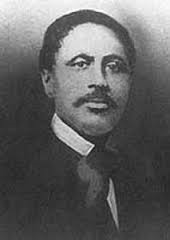
Macon Bolling Allen, first African American lawyer admitted to the bar, passed examination at Worchester, Massachusetts. Macon B. Allen was the first African American lawyer to be admitted to a state bar, and the first African American to hold a judicial position in the United States. Macon was born in Indiana in 1816 and learned to read and write on his own. He worked as a teacher, but moved to Maine in his late twenties, serving there as an apprentice in a law firm.
After passing the Maine Bar Exam in 1844, Allen could not find work because of his race. He moved to Boston, where he opened the first black law office in the United States. In 1848, Allen became Justice of the Peace for Middlesex County in Massachusetts. He later moved to South Carolina, where he was appointed as a judge in the Inferior Court of Charleston in 1873. He also served as Probate Judge of Charleston in 1874. Allen practiced law until his death in 1894.
On May 2, 1967, more than 100 Black students at Northwestern University in Evanston, Illinois, seized the Bursar’s (Finance) Office in a bold demonstration against racial discrimination and academic exclusion. The protest lasted 38 hours and became a pivotal moment in campus activism. The students presented a list of demands calling for a Black studies curriculum, increased Black student enrollment, better support for Black students, and the establishment of a Black student union. Their efforts led to meaningful changes, including the creation of the Department of African American Studies and more inclusive university policies. The Bursar’s Office Takeover remains a landmark example of student-led reform in higher education.
On May 2, 1948, the United States Supreme Court issued a landmark civil rights ruling in Shelley v. Kraemer, declaring that courts could not enforce racially restrictive covenants in property deeds. These covenants, which were widespread across the country, barred Black families and other minorities from buying or occupying homes in certain neighborhoods. The decision did not outlaw the covenants themselves but prohibited state and federal courts from upholding them—effectively stripping them of legal power. The case was brought by the Shelley family, African American homeowners in St. Louis, Missouri, who challenged the systemic housing discrimination that had long excluded Black Americans from suburban homeownership and generational wealth. This ruling paved the way for broader challenges to housing segregation and remains a foundational case in the history of U.S. civil rights law.
From May 1 to May 3, 1866, one of the earliest post–Civil War race massacres occurred in Memphis, Tennessee. White mobs—including police officers and former Confederate soldiers—attacked Black communities in response to tensions over Black Union soldiers returning home and the growing push for civil rights. Over the three-day rampage, at least 46 African Americans were killed, more than 70 were injured, and over 90 Black homes, 12 schools, and 4 churches were burned to the ground. The massacre shocked the nation and fueled support for Radical Reconstruction policies and the 14th Amendment. It remains a sobering example of the violent backlash to Black freedom in the Reconstruction era.
James Brown, one of the most influential figures in American music, was born on May 3, 1933, in Barnwell, South Carolina. Brown helped pioneer soul, funk, and rhythm and blues, leaving an indelible mark on 20th-century popular music. His energetic performances, revolutionary rhythms, and vocal intensity paved the way for countless artists across genres. Beyond music, Brown became an advocate for Black empowerment during the Civil Rights Movement, famously promoting self-reliance with anthems like “Say It Loud – I’m Black and I’m Proud.” His influence stretched from Motown to hip-hop, earning him numerous accolades including inductions into the Rock and Roll Hall of Fame and a Grammy Lifetime Achievement Award.
On May 3, 1960, the U.S. Congress passed the Civil Rights Act of 1960, aiming to address racial discrimination in voting. Building on the earlier 1957 Act, this legislation introduced federal inspection of local voter registration polls and penalties for obstructing Black Americans from voting. While limited in scope, it signaled growing federal willingness to intervene in Southern states that systematically disenfranchised African Americans. The 1960 Act laid groundwork for the more powerful Civil Rights Act of 1964 and the Voting Rights Act of 1965, pivotal in dismantling Jim Crow laws. It demonstrated that legal pressure and organized activism were beginning to crack the foundations of segregation.
On May 3, 1978, the National Urban League, under Vernon Jordan’s leadership, organized a major March on Washington to demand economic opportunities and justice for African Americans. Unlike the 1963 march, this protest was Black-led at every level, reflecting the post-Civil Rights era’s emphasis on Black agency. Demonstrators called for fair employment, better housing, and investment in urban communities. Though it garnered less media coverage than earlier marches, it was significant for pushing the dialogue beyond civil rights toward economic equity—a struggle that remains ongoing today.
On May 3, 1963, during the Birmingham Campaign in Alabama, hundreds of young Black protesters faced fire hoses and police dogs under Bull Connor’s orders. Captured on national television, these brutal scenes shocked the nation and the world, galvanizing support for civil rights legislation. The campaign, led by Martin Luther King Jr. and the Southern Christian Leadership Conference (SCLC), aimed to dismantle Jim Crow segregation in the city known as “the most segregated in America.” May 3rd marked a turning point, with children leading “Children’s Crusade” marches, demonstrating remarkable courage and shifting public opinion irreversibly.
John Brown, a white abolitionist who would become a fierce ally to Black freedom fighters, was born on May 3, 1808, in Connecticut. Though controversial, Brown’s deep conviction that slavery must be eradicated by any means—even violence—made him a singular figure in American history. His 1859 raid on Harper’s Ferry aimed to ignite a slave rebellion. Though the raid failed and Brown was executed, his actions helped heighten tensions leading to the Civil War. Many Black leaders, including Frederick Douglass and later W.E.B. Du Bois, recognized Brown as a martyr for the cause of Black liberation.
On May 3, 1980, musician and cultural advocate Kenny Gamble met with political leaders to push for the official recognition of June as Black Music Month. Although President Jimmy Carter formally proclaimed it later that year, the groundwork began with this pivotal May meeting. Black Music Month honors the immeasurable contributions of African Americans to music genres including jazz, gospel, blues, R&B, hip-hop, and rock and roll. It institutionalized a national celebration of Black creativity and cultural impact, highlighting a central pillar of American—and global—artistic life.


© 2026 KnowThyHistory.com. Know Thy History