On May 4, 1897, inventor J.H. Smith, an African American innovator, was awarded U.S. Patent No. 581,785 for a rotary lawn sprinkler. Smith’s invention improved the even distribution of water across lawns and gardens, using a rotating nozzle to deliver consistent pressure. His design helped shape the modern irrigation systems used in residential and agricultural landscaping today. Smith’s achievement reflects the often-overlooked contributions of Black inventors to everyday conveniences and technological advancement during the late 19th century.
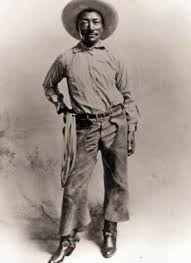
On May 3, 1896, African American cowboy Bill Pickett became widely recognized as the inventor of bulldogging—a daring rodeo technique where a rider leaps from a horse to wrestle a steer to the ground. Inspired by how trained bulldogs helped catch stray cattle, Pickett adapted the method using his own skill and grit. His version included a now-retired tactic of biting the steer’s upper lip while pulling it off balance—a dramatic move that amazed crowds across the Wild West and helped shape modern steer wrestling in rodeos. Pickett toured with the Miller Brothers’ 101 Ranch Wild West Show and became one of the first Black cowboys to gain national fame. His legacy lives on as a trailblazer in both rodeo sports and African American frontier history.
On May 4, 1961, thirteen courageous civil rights activists—seven Black and six white—departed Washington, D.C., on Greyhound and Trailways buses to challenge segregated bus terminals across the American South. Known as the Freedom Riders, they tested the Supreme Court’s decision in Boynton v. Virginia (1960), which outlawed segregation in interstate bus and rail travel.
Organized by the Congress of Racial Equality (CORE), the riders faced threats, mob violence, and arrests as they journeyed through Virginia, the Carolinas, Georgia, Alabama, and Mississippi. Their bravery sparked a national movement and drew international attention to the injustices of Jim Crow segregation, ultimately pressuring the federal government to enforce desegregation laws more strictly.
On May 4, 1891, Dr. Daniel Hale Williams founded Provident Hospital and Training School in Chicago, Illinois—the first interracial hospital in the United States. At a time when African Americans were often denied treatment at white hospitals, Dr. Williams created a facility where Black patients could receive quality care and where Black medical professionals could train and work. Provident not only offered lifesaving services, but it also became a pioneering institution for nursing and surgical education. Just two years later, Dr. Williams would perform one of the first successful open-heart surgeries at this very hospital, cementing both his and the institution’s place in medical history.
On May 4, 1864, General Ulysses S. Grant launched the Overland Campaign by crossing the Rapidan River, initiating a fierce and prolonged duel with Confederate General Robert E. Lee. While Grant’s main forces engaged Lee in the bloody Wilderness battles, a lesser-known but critical front was unfolding under Major General Benjamin Butler. Commanding the Army of the James, Butler included nearly 1,800 Black cavalrymen and multiple regiments of Black infantry. Though often sidelined in historical accounts, these soldiers—many formerly enslaved—played a pivotal role in seizing key Confederate positions and disrupting supply lines. Butler, a vocal advocate for Black troops, gave them front-line responsibilities and publicly praised their valor, further validating their place in the Union war effort.
Frederick Douglass, renowned abolitionist and statesman, delivered a powerful address during national labor rallies linked to the Haymarket Affair. Although primarily remembered for his anti-slavery work, Douglass championed workers’ rights late in life, recognizing that economic injustice and racial injustice were intertwined. His speech emphasized solidarity across racial and labor lines, urging Americans to honor the dignity of all laborers, black and white alike. Douglass’s commitment to both racial and economic equality demonstrated his broader vision for America — one that encompassed not only freedom from slavery but also freedom from economic oppression.
On May 4, 1910, Booker T. Washington officially launched National Negro Health Week. Alarmed by the devastating impact of preventable diseases within Black communities, Washington called for coordinated health campaigns focused on hygiene, sanitation, and medical access. The initiative empowered African Americans to take proactive steps toward improving community health. Supported by Black churches, schools, and the U.S. Public Health Service, the campaign eventually expanded into broader public health efforts that laid foundations for future health equity movements. Washington’s vision connected physical health with economic and social progress.
Born May 4, 1928, in Liberia, Hosanna Kabakoro later became a U.S.-based journalist who used her platform to advocate for African rights during the Civil Rights era. Kabakoro’s writing highlighted the interconnectedness of African independence movements and African American struggles for equality. Her work bridged diasporic conversations, encouraging solidarity and shared political strategies. Although less widely known today, Kabakoro’s contributions helped lay groundwork for Pan-African thought in American media.
The Free South Theatre was founded on May 4, 1946, in Atlanta, Georgia, as one of the first Black-owned and operated theater companies focused on telling authentic African American stories. At a time when mainstream American theaters largely excluded Black artists or presented stereotyped depictions, the Free South Theatre became a space for genuine artistic expression and political resistance. It paved the way for later groups like the Negro Ensemble Company, advancing Black narratives on stage and providing critical training grounds for young Black actors, writers, and directors.
On May 4, 1942, Doris “Dorie” Miller, an African American sailor, was awarded the Navy Cross for his heroic actions during the attack on Pearl Harbor. As a cook aboard the USS West Virginia, Miller manned anti-aircraft guns during the attack—despite having no formal training—and helped carry wounded sailors to safety. His bravery under fire challenged racial stereotypes within the military and symbolized Black Americans’ commitment to the defense of a country that often marginalized them. Miller’s recognition was a powerful, though rare, acknowledgment of African American valor in World War II.


© 2026 KnowThyHistory.com. Know Thy History