
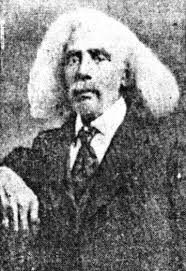
Joseph R. Winters, an African American inventor, was granted U.S. Patent number 203,517 for a fire escape ladder on May 7, 1878. His innovation used a metal frame and a system that allowed quick deployment from building windows, vastly improving fire rescue operations. Winters had previously invented a wagon-mounted fire escape ladder but improved on it with this portable design. His work saved countless lives and paved the way for modern emergency equipment. A tireless advocate for safer urban living, Winters’ contributions often go overlooked despite their wide-reaching impact. His designs also showed the world the critical role of African American inventors in shaping public safety measures during the 19th century.
On May 7, 1976, William H. Hastie was inaugurated as the first Black governor of the U.S. Virgin Islands, marking a pivotal moment in U.S. territorial leadership. Though he had previously served as governor by presidential appointment in the 1940s, this ceremony commemorated his official election through democratic processes. A former federal judge and civil rights trailblazer, Hastie had long advocated for self-governance and representation of the Virgin Islands. His legacy includes pushing for political autonomy and serving as a role model for future generations of Black public servants in the Caribbean and beyond.
On May 7, 1885, Dr. John E. W. Thompson—an African American graduate of Yale University Medical School—was appointed U.S. Minister Resident and Consul General to Haiti. A trailblazer in both medicine and diplomacy, Thompson’s appointment marked one of the earliest high-ranking diplomatic roles for a Black American. He was tasked with strengthening U.S.-Haiti relations during a time when the Caribbean nation held deep symbolic and strategic importance in the Americas. His dual identity as a physician and statesman exemplified the rising influence of educated Black professionals during the post-Reconstruction era.
On May 7, 1867, African American demonstrators in New Orleans staged a powerful “ride-in” protest to challenge segregation on the city’s streetcar system. Just two years after the end of the Civil War, Black citizens demanded equal access to public transportation by boarding cars designated for white passengers. The peaceful yet defiant act ignited similar protests across the South, including in Mobile, Alabama, and other Reconstruction-era cities. These early civil disobedience campaigns laid critical groundwork for the later, more widely known bus boycotts of the 20th century. The riders’ courage in confronting racial injustice helped spark broader conversations about civil rights in postwar America.
On May 7, 1800, Jean Baptiste Pointe DuSable—recognized as the “Father of Chicago”—sold all his property along the Chicago River for $1,200 and left the region. A Black pioneer of Haitian descent, DuSable had established a thriving trading post, farm, and homestead in what would become one of America’s largest cities. His departure marked the end of his foundational role in early Chicago. Despite his lasting legacy, DuSable died in 1818 nearly penniless in St. Charles, Missouri. Today, his contribution is honored with monuments, schools, and museums in Chicago, recognizing him as one of the city’s earliest non-Indigenous settlers and entrepreneurs.
On May 7, 1955, Reverend George W. Lee, one of the first Black people registered to vote in Humphreys County, Mississippi since Reconstruction, was murdered for his civil rights activism. A minister and entrepreneur, Lee worked tirelessly to register Black voters in the segregated South, where Jim Crow laws reigned. Despite threats to his life, he refused protection that would have compromised his cause. His brutal assassination — shot while driving his car — became an early martyrdom of the modern Civil Rights Movement. Lee’s death, though not receiving as much national attention as later incidents, fueled outrage and inspired more activists to rise against systemic racism and voter suppression.
William J. Seymour, born May 7, 1870, became a pivotal figure in the spread of Pentecostalism. As the son of formerly enslaved parents in Louisiana, Seymour faced deep racial discrimination but found solace and leadership in Christianity. In 1906, his preaching ignited the Azusa Street Revival in Los Angeles, a multiracial, spirit-filled movement that profoundly shaped global Christianity. Seymour’s insistence on racial integration within worship services was revolutionary for its time. His leadership style was humble, Spirit-driven, and egalitarian, marking him as a major architect of modern Pentecostalism, now one of the world’s fastest-growing religious movements.
Glenda Hatchett, born May 7, 1952, in Atlanta, Georgia, would become a trailblazing African American jurist and television personality. After graduating from Emory University School of Law, she served as the Chief Presiding Judge of the Fulton County Juvenile Court — Georgia’s largest juvenile court system. Hatchett became nationally known through her TV show Judge Hatchett, which blended real-life cases with life lessons for families. Beyond her courtroom work, Hatchett has advocated for children’s rights, domestic violence prevention, and educational reform, inspiring generations of young Black women to pursue law and leadership roles.
On May 7, 1877, federal troops withdrew from South Carolina, signaling the end of Reconstruction and the dismantling of Black political power in the state. Black legislators had made historic gains following the Civil War, with South Carolina’s legislature becoming majority-Black for a time. However, with the federal government’s retreat, white supremacist groups quickly reinstated discriminatory laws and violence to suppress African American rights. This tragic shift inaugurated the long Jim Crow era, reversing much of the progress made during Reconstruction and perpetuating systemic inequality for nearly a century afterward.
On May 7, 1963, thousands of Black schoolchildren in Birmingham, Alabama, continued to march for civil rights, following the first mass arrests the day before. The Children’s Crusade — orchestrated by the Southern Christian Leadership Conference and leaders like James Bevel — saw young activists filling the jails and overwhelming the city’s segregationist defenses. Their courage in facing fire hoses, police dogs, and brutal arrests captured the nation’s attention and created momentum that led to the Civil Rights Act of 1964. The events of May 7, specifically, showed the power of youth in forcing moral reckonings around civil rights.


© 2026 KnowThyHistory.com. Know Thy History