
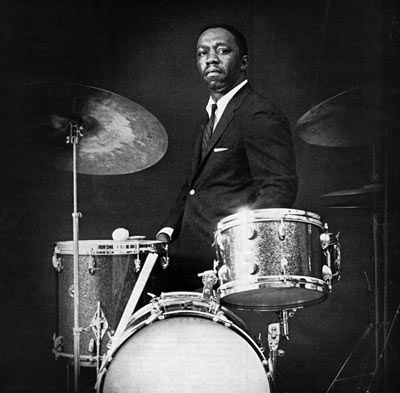
On the first day of 1947, drummer Art Blakey laid the foundation for what would become one of the most iconic jazz groups of all time: The Jazz Messengers. Originally a cooperative group co-led with pianist Horace Silver, the ensemble soon evolved under Blakey’s sole leadership into a legendary incubator for young jazz talent. The Jazz Messengers played a pivotal role in defining and spreading the hard bop sound—an earthier, blues- and gospel-infused evolution of bebop. Over the decades, the group served as a proving ground for future stars such as Wayne Shorter, Lee Morgan, Freddie Hubbard, Wynton Marsalis, and many more. Blakey’s insistence on both musical excellence and mentorship made the Jazz Messengers not just a band, but a rite of passage. His commitment to Black artistic integrity and innovation continues to resonate, making January 1, 1947 a key milestone in the history of jazz.
On this day, President Abraham Lincoln signed the Emancipation Proclamation, declaring all enslaved people in Confederate states to be free. However, the proclamation did not apply to enslaved people in certain exempted areas, including thirteen parishes in Louisiana (such as New Orleans), forty-eight counties in West Virginia, and seven counties in Eastern Virginia (including Norfolk). It also did not apply to slaves in the Border States that remained in the Union.
Omega Psi Phi, the first international fraternal organization founded on the campus of a historically Black college, was incorporated on this day. Established at Howard University in 1911, the fraternity became a legal entity in 1914, marking a key moment in African American collegiate life and leadership development.
On this day, C. W. Allen invented the self-leveling table, an innovative device designed to maintain a level surface regardless of movement. He was granted U.S. Patent No. 613,436 on November 1, 1898, for this invention. His contribution reflects the ingenuity and impact of Black inventors in the field of mechanical design during the late 19th century.
William Monroe Trotter, a Harvard-educated activist and outspoken advocate for civil rights, launched The Guardian as a platform to challenge racial injustice and oppose accommodationist approaches to segregation. The paper became a powerful voice for Black Americans during the early 20th century.
A law took effect in Arkansas prohibiting the employment of free Black individuals on boats and ships navigating the state’s rivers. This legislation reflected the increasing hostility toward free Black people in the South, aiming to limit their economic opportunities and mobility. It also foreshadowed the growing tensions that would erupt into the Civil War the following year.
The first celebration of Kwanzaa, created by Dr. Maulana Karenga in 1966, concluded on January 1 with “Imani,” the seventh principle of the Nguzo Saba. Imani, meaning “faith” in Swahili, encourages belief in the community, its leaders, and the righteousness of the Black struggle. Kwanzaa honors African heritage and values, and this final day reflects the importance of spiritual and communal confidence.
Lola Falana, an American singer, dancer, and actress, was born in Camden, New Jersey. Known as the “First Lady of Las Vegas,” Falana broke barriers as one of the first African-American women to headline major shows in Las Vegas during the 1970s. Her dynamic performances and charisma made her a trailblazer in entertainment, bridging music, film, and stage.
Kofi Annan began his term as the seventh Secretary-General of the United Nations, making history as the first Black person and the first sub-Saharan African to hold the position. His leadership would later earn him the Nobel Peace Prize in 2001, shared with the UN for their work toward a better organized and more peaceful world.
On January 1, 1960, Cameroon gained independence from France, becoming the Republic of Cameroon. This marked a significant moment in the broader wave of African decolonization during the mid-20th century. Cameroon’s independence was a key step toward self-determination for its people and contributed to the reshaping of post-colonial Africa.


© 2026 KnowThyHistory.com. Know Thy History