
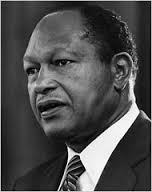
On May 29, 1973, Tom Bradley made history by being elected the first African American mayor of Los Angeles, becoming the first Black mayor of a major Western U.S. city. A former LAPD officer and city councilman, Bradley’s election broke racial barriers in a city deeply divided by race and class. His campaign coalition of Black, Latino, Jewish, and white liberal voters marked a new era in urban politics. As mayor, Bradley focused on civil rights, infrastructure development, and economic expansion, serving five terms from 1973 to 1993. His leadership helped position Los Angeles as a global metropolis and became a model for multiracial urban governance. May 29 is a key date in the political empowerment of African Americans, showing that progressive coalitions could win high office even amid institutional racism. Bradley\’s legacy remains vital in conversations about inclusive politics and urban policy today.
Frederick M. Jones, a prolific African American inventor, was granted a patent for a two-cycle gasoline engine on May 29, 1945 (U.S. Patent No. 2,376,968). Best known for inventing mobile refrigeration for trucks and trains, Jones held over 60 patents in his lifetime—many in the field of refrigeration, but also covering engines, electronics, and sound equipment. His innovations revolutionized the food and transportation industries and played a key role in preserving medical supplies during World War II.
On May 29, 1980, Vernon E. Jordan Jr., then President of the National Urban League, was critically injured in an assassination attempt in Fort Wayne, Indiana. A prominent civil rights leader and political advisor, Jordan survived the shooting and went on to play a key role in American social and political life. The attack was later linked to white supremacist Joseph Paul Franklin.
On May 29, 1914, Henry Ransom Cecil McBay was born in Mexia, Texas. A brilliant chemist and influential educator, McBay earned his Bachelor of Science from Wiley College in 1934, his Master of Science from Atlanta University in 1936, and a Ph.D. in Chemistry from the University of Chicago in 1945. He made significant contributions to the development of chemical agents and served as an instructor at his alma mater, Wiley College, before joining Morehouse College, where he mentored generations of Black scientists and medical professionals. His work helped pave the way for future African Americans in STEM fields.
On this day, President Andrew Johnson unveiled his plan for Reconstruction after the Civil War. His program required former Confederate states to ratify the 13th Amendment, which abolished slavery. However, it did not require any protections for Black suffrage or civil rights, leaving formerly enslaved people vulnerable to new systems of racial oppression in the South.
On May 29, 1851, abolitionist and women\’s rights activist Sojourner Truth delivered her iconic speech “Ain’t I a Woman?” at the Women’s Convention in Akron, Ohio. Born into slavery, Truth became one of the most powerful voices for emancipation and gender equality in 19th-century America. In her speech, she boldly challenged prevailing notions of racial and gender inferiority. Though the exact wording has been debated due to transcription differences, her core message was clear—Black women were doubly marginalized and deserved equal rights. Her oration addressed the intersectionality of race and gender long before the term existed. Truth’s courageous words resonated across time, inspiring generations of Black feminists and civil rights activists. This speech remains a cornerstone in both feminist and Black liberation history, taught in classrooms and quoted in movements around the world. Sojourner Truth’s voice, raised on May 29, changed the course of American discourse forever.
On May 29, 1917, John F. Allen, an African American physicist and chemist, was born in Maryland. Allen played a pivotal role in the Manhattan Project, the U.S. government’s top-secret program during World War II that developed the atomic bomb. Despite pervasive racial discrimination, Allen’s expertise in nuclear chemistry and radiochemistry earned him a position as one of the few Black scientists involved in this critical effort. After the war, Allen continued his research and helped pave the way for African Americans in science, technology, engineering, and mathematics (STEM). His achievements are a testament to resilience and intellectual excellence in the face of systemic barriers. Celebrating his birth on May 29 highlights the significant yet often overlooked contributions of Black scientists to global scientific advancement. Allen\’s legacy reminds us that Black excellence in STEM has deep historical roots that deserve wider recognition.
On May 29, 1964, Malcolm X delivered a powerful speech in London at the London School of Economics as part of his international tour following his break from the Nation of Islam. In this talk, Malcolm X articulated a global vision for Black liberation, connecting the African American struggle to anti-colonial movements across Africa and the Caribbean. He emphasized Pan-African unity, self-determination, and the importance of international human rights frameworks. His presence in Europe marked a turning point in globalizing the civil rights struggle and reframing it as part of a broader liberation narrative. Malcolm X’s message on that day challenged both white supremacy and the limits of integrationist politics, offering a bold alternative rooted in self-respect, sovereignty, and Black power. May 29 stands as a critical moment in global Black consciousness and revolutionary thought. Malcolm’s London speech continues to inspire international solidarity and Black radical politics worldwide.
On May 29, 1936, Joe Louis, the legendary African American heavyweight boxer, faced off against German boxer Max Schmeling in a match that carried immense political symbolism. Though Louis lost this first bout, the fight symbolized more than a sporting event—it was a racial and ideological showdown. Schmeling was portrayed by Nazi Germany as a symbol of Aryan superiority, while Louis represented Black resilience and American hope during the Jim Crow era. The media attention and racial undertones made it a pivotal cultural moment. Louis\’s eventual rematch and triumph in 1938 would become even more historic, but the May 29, 1936 fight is remembered for launching his role as a national hero and racial pioneer. This date underscores how sports have historically served as battlegrounds for racial representation and civil rights. Joe Louis’s career challenged segregation and paved the way for future Black champions in all arenas.
On May 29, 1974, music legend Dionne Warwick was awarded a star on the Hollywood Walk of Fame, honoring her decades of excellence in the music industry. Known for her soulful voice and collaborations with Burt Bacharach and Hal David, Warwick became one of the most charted female vocalists in history. Her hits like \”Walk On By,\” \”I Say a Little Prayer,\” and \”Do You Know the Way to San Jose\” are timeless classics. Warwick broke barriers as a Black female artist navigating a predominantly white pop industry in the 1960s and 1970s, and she later became a leading figure in AIDS awareness and humanitarian work. Receiving her star on May 29 not only marked a personal achievement but also affirmed Black women\’s influence in shaping global pop culture. Her recognition on this day cements Warwick’s status as an icon and trailblazer in entertainment history.


© 2026 KnowThyHistory.com. Know Thy History